


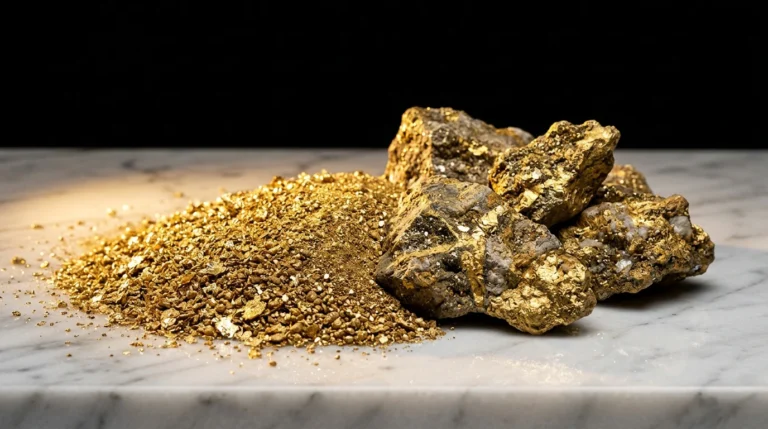
Gold Soil and Gold Ore; Two Different Concepts in Gold Extraction
In the gold mining industry, one of the most common professional misconceptions is treating Gold Soil (Gold Dust / Alluvial Gold) and Gold Ore as the same thing. Although both materials contain gold, they differ fundamentally in geological origin, extraction method, processing, valuation, and commercial applications. Understanding these distinctions is essential for mining investors, exporters, traders, and researchers in this field.
Gold occurs in nature in two main forms: as Primary Deposits located within hard rock, and as Secondary/Placer Deposits accumulated in riverbeds, alluvial plains, and sedimentary soils. This geological classification forms the basis of the distinction between gold ore and gold soil.
In this specialized article, we examine in detail the characteristics of each, identification methods, processing, and their economic significance.

What Is Gold Soil? Origin, Characteristics, and Applications
Definition and Geological Origin
Gold soil, or Alluvial/Placer Gold, results from the long-term erosion of gold-bearing veins in bedrock. Over thousands of years, erosive forces such as water, wind, and temperature changes separated gold particles from the parent rock and deposited them along rivers and sedimentary basins. These particles are usually found as fine grains, thin flakes, or rarely as natural Nuggets.
Physical and Chemical Characteristics
Gold soil typically has a purity between 85% and 98%, because during the sedimentary transport process, impurities such as silver and copper were separated. Its color is bright yellow, it is resistant to acids, and it has a high specific gravity (about 19.3 grams per cubic centimeter).
Gold Soil Extraction Methods
- Panning: The most basic method, using circular pans to separate gold from sediments.
- Sluicing: Using water flow and corrugated plates to separate heavy particles.
- Dredging: Extracting sediments from riverbeds or sea floors with heavy machinery.
- Gravity Separation: Separating gold based on differences in specific gravity.
What Is Gold Ore? Types, Characteristics, and Processing
Gold ore refers to rocks in which gold is present as microscopic particles or visible veins within the rock’s texture. These rocks usually form at high temperatures and under hydrothermal conditions.
The most important types of gold ore are:
1. Quartz Vein Gold: The most common type, where gold is trapped within white quartz veins.
2. Epithermal Deposits: Formed at shallow depths and lower temperatures; including high-grade deposits.
3. Porphyry Deposits: High volume but low grade; usually extracted alongside copper.
4. Refractory Ore: Gold is locked within the structure of arsenopyrite or pyrite minerals, making extraction more complex.
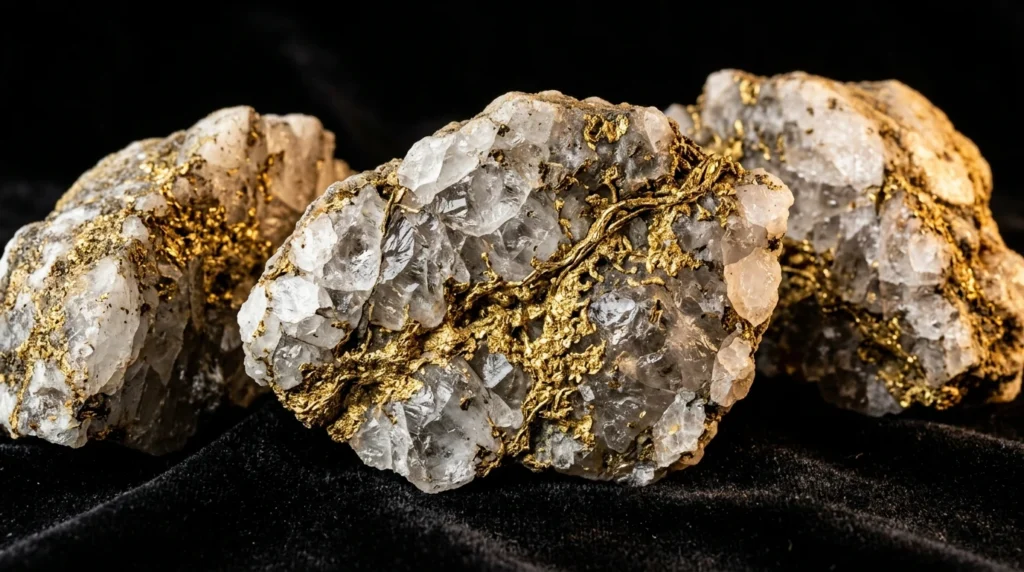
Comparison Table of Gold Soil and Gold Ore
| Feature | Gold Soil | Gold Ore |
|---|---|---|
| Origin | Alluvial and sedimentary | Hydrothermal and magmatic |
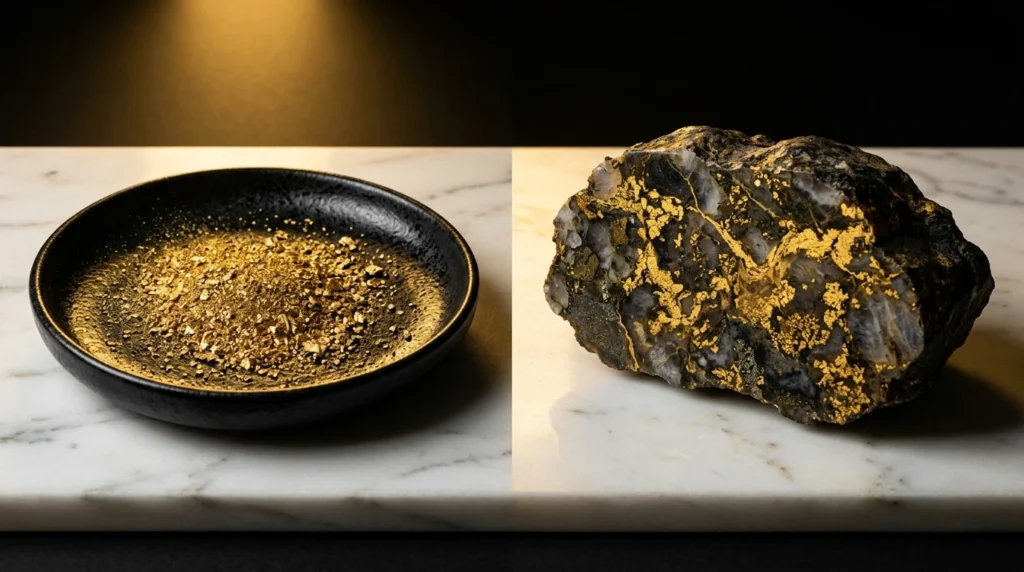
| Appearance | Fine grains, flakes, nuggets | Rock containing veins or scattered particles |
| Typical Purity | 85% to 98% | 0.1 to several grams per ton |
| Extraction Method | Washing, sluicing, dredging | Blasting, drilling, underground mining |
| Processing Method | Direct smelting or amalgamation | Cyanidation, flotation, biohydrometallurgy |
| Extraction Cost | Relatively low | Very high |
| Production Scale | Small to medium | Industrial and large-scale |
| Valuation | Based on weight and purity grade | Based on grade per ton of rock |
Differences in Processing Methods and Valuation
Gold Soil Processing
Due to its high purity, gold soil often does not require complex processing. Common methods include:
- Amalgamation: Bonding gold to mercury and then thermal separation — although this method is banned or restricted in many countries due to the toxicity of mercury.
- Direct Smelting: Suitable for nuggets and coarse particles.
- Electrorefining: To achieve 99.99% purity in the production of gold bullion.
Gold Ore Processing
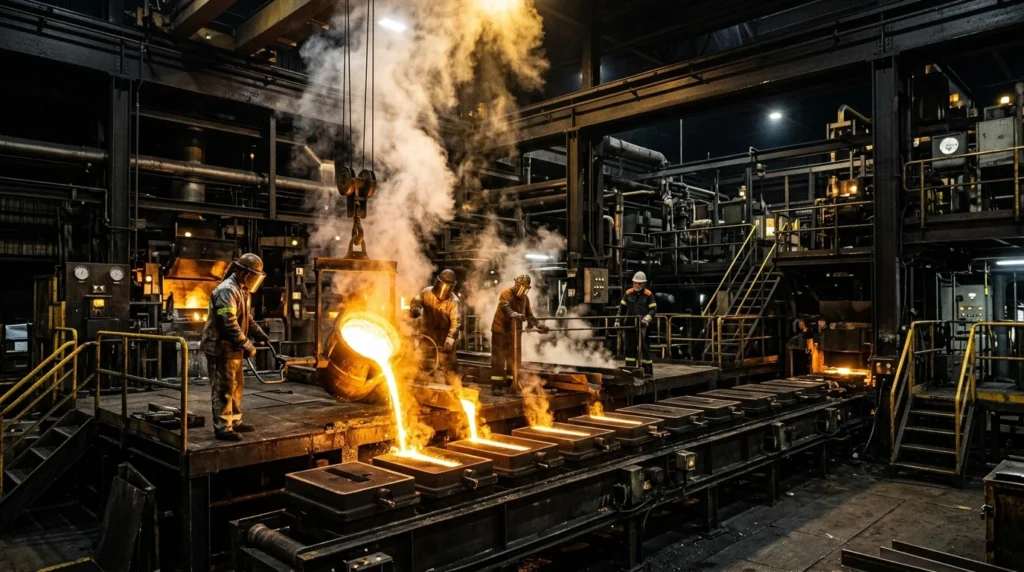
Due to its low grade (usually 1 to 5 grams per ton of rock), gold ore requires complex industrial processing:
- Cyanidation/Carbon-in-Pulp: The most common method, which extracts gold using a cyanide solution.
- Flotation: For concentrating sulfide ores.
- Pressure Oxidation (POX): For refractory ores.
- Bio-oxidation (BIOX): Using oxidizing bacteria to release gold from the pyrite structure.
Economic Value, Export, and Legal Framework
Valuation in the Global Market
The price of gold in the global market is determined based on the Troy Ounce and according to the London Bullion Market Association (LBMA) rate. However, different criteria apply to gold soil and ore:
- Gold Soil: Direct valuation based on weight and purity percentage, with a discount relative to the bullion price.
- Gold Ore: Based on Grade in grams per ton (g/t) and operational extraction costs.
Export of Gold Soil and Ore from Iran
In Iran, gold soil and gold bullion are under the supervision of the Central Bank of the Islamic Republic of Iran, and their free export is not permitted. However, gold ore in some cases is exportable with a permit from the Ministry of Industry, Mine and Trade and after completing domestic value-added processing.
Important gold mines in Iran include the Mouteh Mine in Isfahan, the Zarshouran Mine in Tabriz, and the Agh-Darreh Mine in Khorasan. In its development plans, Iran pursues the goal of reaching an annual production of 10 tons of gold.
Legal and Environmental Considerations
- Gold soil is considered state property in many countries, and its unauthorized extraction is a criminal offense.
- The use of mercury in gold processing is banned in most countries.
- Environmental standards such as ISO 14001 and cyanide wastewater management regulations must be observed.
Practical Guide for Investors and Traders
When to Buy Gold Soil?
Gold soil is suitable for investors seeking short-term inflation hedging who have the ability to assess grade. Key points:
- Always use Fire Assay or XRF spectrometry to confirm the grade.
- Avoid buying gold soil from anonymous or undocumented sources.
- Match the price to the daily global market price and expect a maximum discount of 10% to 15% relative to the bullion price.
When to Invest in Gold Ore?
Investment in gold ore usually takes the form of mining company shares, mineral bonds, or participation in extraction projects. The evaluation criteria for gold mining projects include:
- Cut-off Grade: The minimum economic grade, usually higher than 0.5 grams per ton for open-pit mines.
- All-In Sustaining Cost (AISC): A key indicator for evaluating the profitability of gold mines.
- Standard JORC or NI 43-101 reports to verify reserves.
Conclusion
The distinction between gold soil and gold ore goes beyond a mere technical definition; this difference directly affects all aspects of the value chain — from extraction to processing, from pricing to export, and from the legal framework to investment risk. Investors and economic actors who correctly understand these distinctions will be in a much better position to make informed and profitable decisions in this competitive market.


No comments yet.